
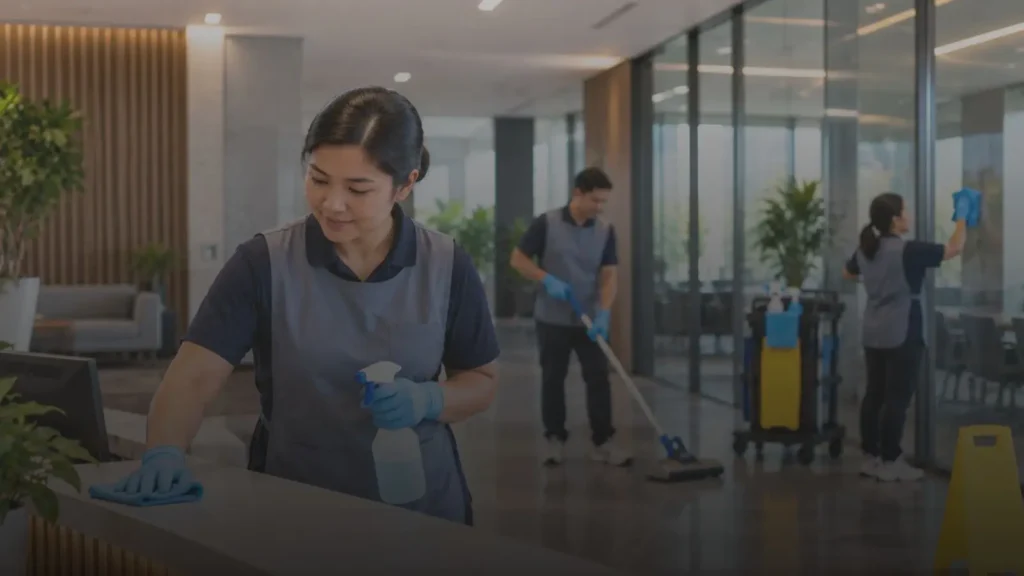
Hiring commercial cleaners is an important decision for any business. The right cleaning provider does more than keep floors clean and bins empty. They become part of the system that helps maintain your workplace’s presentation, hygiene, safety, and day-to-day readiness.
For businesses across Auckland, choosing a commercial cleaning company should therefore involve more than comparing prices. You need to understand how a provider works, what is included in the service, how cleaners are trained, how quality is monitored, and whether the cleaning programme can adapt to the needs of your workplace.
Commercial properties also have very different requirements. A corporate office may prioritise meeting rooms, workstations, kitchens, bathrooms, carpets, and glass partitions, while a retail environment may require greater attention to entrances, customer-facing areas, floors, and high-traffic spaces.
Asking the right questions before hiring commercial cleaners in Auckland can help you compare providers more effectively and choose a cleaning partner capable of delivering consistent, professional results.
Why Choosing the Right Commercial Cleaners Matters
Commercial cleaning should not be approached as a basic list of tasks.
A professional cleaning programme needs to consider how a workplace is actually used. High-traffic entrances may require more frequent floor care. Shared kitchens and bathrooms need consistent attention. Client-facing areas need to remain professionally presented, while carpets, glass, and hard flooring may require specialised cleaning at different intervals.
Consistency matters as much as the cleaning itself. A workplace that looks excellent after one service but noticeably neglected a few days later does not reflect a well-managed cleaning programme.
The provider you choose will also be working around your employees, customers, visitors, equipment, and business assets. That makes reliability, communication, training, safety procedures, and quality control essential considerations.
Before signing a commercial cleaning agreement, these are the questions worth asking.
1. What Experience Do You Have With Commercial Cleaning?
Experience should be one of the first areas you discuss with a potential cleaning provider.
Commercial environments present different challenges from residential properties. Cleaners may need to work around employees, customers, confidential workspaces, sensitive equipment, security requirements, high-traffic areas, and specific operating hours.
Look for Experience Relevant to Your Workplace
Instead of simply asking how many years a cleaning company has been operating, ask whether it has experience with properties similar to yours.
A provider experienced in commercial cleaning should be able to understand the requirements of different workplaces and recommend an appropriate cleaning approach based on the property.
For example, an office may need regular attention to reception areas, meeting rooms, kitchens, bathrooms, workstations, carpets, and glass. A busy retail or customer-facing property may require more frequent cleaning of entrances, floors, high-touch surfaces, and shared areas.
The provider should also ask questions about your premises. If a cleaning company offers a solution before understanding the size of the site, operating hours, occupancy, flooring, traffic levels, and priority areas, the proposed service may not accurately reflect what your workplace needs.
2. What Is Included in Your Commercial Cleaning Service?
Not every commercial cleaning quote includes the same services.
Terms such as “office cleaning” and “commercial cleaning” can cover very different scopes of work depending on the provider. Before comparing quotes, make sure you understand exactly what each company intends to deliver.
Ask for a Clearly Defined Scope of Work
A professional proposal should explain which areas will be cleaned, which tasks will be performed, and how frequently the work will take place.
Reception areas, bathrooms, kitchens, workspaces, meeting rooms, floors, glass, and shared amenities may all require different levels of attention. Specialised work such as carpet cleaning, floor scrubbing and polishing, steam cleaning, or detailed glass cleaning may also need to be scheduled separately.
Having a clearly defined scope helps establish expectations from the beginning and makes it easier to assess whether cleaning standards are being maintained.
If you are determining what your workplace cleaning programme should include, FriendlyCare’s commercial cleaning checklist for Auckland offices provides a more detailed guide to establishing structured cleaning routines for commercial workplaces.
3. Can the Cleaning Schedule Be Tailored to Our Business?
Commercial cleaning should work around your operations rather than disrupt them.
Some workplaces require cleaning before employees arrive, while others prefer evening or after-hours cleaning. Larger facilities and high-traffic commercial areas may require additional attention during operating hours.
Your Workplace Should Determine the Schedule
Ask whether the provider can develop a cleaning schedule around your operating hours, occupancy, visitor traffic, and specific requirements.
A smaller workplace may require cleaning only on selected days. A busy office or customer-facing commercial property may need daily cleaning, particularly in bathrooms, kitchens, entrances, reception areas, and other frequently used spaces.
FriendlyCare states that its cleaning plans can be customised to the site, schedule, and specific requirements, with after-hours cleaning also available.
The important question is whether the provider is prepared to understand your business first and build the cleaning schedule around it.
4. How Do You Maintain Consistent Cleaning Standards?
A commercial cleaning company may make an excellent first impression, but the real test is whether that standard can be maintained week after week.
Consistency is one of the most important qualities to look for when hiring professional commercial cleaners.
Ask About Quality Control
Find out how the provider monitors its work, manages inspections, communicates with cleaning teams, and responds when something does not meet the agreed standard.
A strong quality-control process creates accountability.
This is especially important in customer-facing areas. Entrances, reception areas, meeting rooms, bathrooms, kitchens, and shared facilities should remain consistently presentable rather than fluctuating noticeably between cleaning visits.
FriendlyCare’s cleaning insights for Auckland businesses provide additional guidance on workplace hygiene, cleaning routines, facility maintenance, and maintaining consistent standards across commercial environments.
5. What Cleaning Products, Equipment, and Methods Do You Use?
Professional commercial cleaning depends on more than having someone available to perform the work.
The products, equipment, and methods used can influence cleaning effectiveness, surface protection, workplace safety, and the overall quality of the result.
Different Surfaces Need Appropriate Cleaning Methods
Most commercial properties contain a combination of carpet, hard flooring, glass, stainless steel, desks, furniture, fixtures, and other materials.
The same cleaning method will not be appropriate for every surface.
Ask prospective cleaners how they determine which products and equipment should be used and whether their teams receive appropriate training.
You should also understand whether the cleaning provider supplies its own products and commercial-grade equipment or expects your business to provide them.
For businesses wanting to understand the rules surrounding workplace cleaning products and hazardous substances, the New Zealand Environmental Protection Authority’s workplace products guidance explains the responsibilities associated with hazardous substances used in workplaces and the respective roles of EPA and WorkSafe New Zealand.
6. How Do You Manage Workplace Health and Safety?
Commercial cleaners often work in areas that continue to be used by employees, customers, visitors, and contractors.
The cleaning process itself should therefore be managed carefully.
Cleaning Should Support a Safer Workplace
Ask how the provider manages wet floors, cleaning chemicals, electrical equipment, cables, temporary obstructions, cleaning carts, and other potential hazards.
These considerations are particularly important in entrances, corridors, stairways, bathrooms, kitchens, lift lobbies, and other high-traffic commercial areas.
WorkSafe New Zealand identifies slippery floors, damaged flooring, clutter, poor lighting, and inadequate housekeeping among the factors that can contribute to slips, trips, and falls. Its guidance also recommends identifying and controlling risks according to the circumstances of the workplace.
Businesses can review the complete WorkSafe New Zealand guidance on slips, trips and falls for further information.
A professional cleaning provider should understand that completing the cleaning task is only part of the job. How that work is performed matters too.
7. Are Your Commercial Cleaners Trained and Insured?
Knowing who will be working inside your premises is another important consideration.
Commercial cleaners may have access to workstations, computers, equipment, stock, documents, meeting rooms, and other business assets, particularly when cleaning is performed outside normal operating hours.
Ask About Training, Staffing, and Supervision
Find out how cleaners are trained, managed, and supervised.
Ask whether cleaners are insured and whether the same team will regularly service your workplace or staff will frequently rotate.
Consistency in staffing can be beneficial because cleaners become familiar with the layout of your premises, access procedures, priority areas, cleaning scope, and expected standards.
There should also be clear accountability. If something is missed or an issue occurs, your business should know who is responsible for addressing it.
FriendlyCare’s commercial cleaning FAQs address several of these considerations, including staff training and insurance, equipment, customised cleaning plans, after-hours cleaning, and quality-control procedures.
8. How Will Communication and Cleaning Issues Be Managed?
Even a carefully planned commercial cleaning programme will occasionally need to change.
A meeting room may require additional attention before an important presentation. An event may increase foot traffic. A spill may require urgent cleaning. Your business may expand into another section of the building or change its operating hours.
Your cleaning provider needs to be able to respond.
Look for Clear Communication and Accountability
Ask who your main point of contact will be and how cleaning requests, feedback, or service issues should be communicated.
Facility managers should not need to repeatedly chase cleaners or explain the same issue to different people.
There should be a straightforward process for reporting concerns, requesting adjustments, and confirming that issues have been resolved.
Strong communication can transform commercial cleaning from a transactional service into a reliable long-term working relationship.
9. Is the Commercial Cleaning Quote Transparent?
Price matters, but it should not be the only consideration when comparing commercial cleaning companies.
The cheapest quote does not necessarily offer the best value.
A lower price may reflect fewer cleaning hours, reduced frequency, a narrower scope of work, different staffing arrangements, or exclusions that only become apparent after the service begins.
Compare What You Receive, Not Just What You Pay
Ask for a quote that clearly reflects your premises and requirements.
You should be able to understand the cleaning frequency, included areas, expected tasks, specialised services, and any additional costs.
This allows you to compare providers on a more meaningful basis.
A slightly higher quote may represent better long-term value if it includes appropriate cleaning frequency, experienced staff, reliable supervision, stronger quality control, better communication, or services that would otherwise need to be arranged separately.
The goal is not simply to find the lowest cleaning price. It is to find the right level of service for the workplace.
10. Can Your Cleaning Service Adapt as Our Business Changes?
The cleaning programme your workplace needs today may not be the programme it needs next year.
Businesses grow. Teams move. Operating hours change. Offices are renovated. New facilities are introduced, and customer or employee traffic can increase.
Your commercial cleaning provider should be able to adapt accordingly.
Look for a Long-Term Cleaning Partner
Ask whether cleaning frequency, service scope, schedules, and specialised cleaning can be adjusted as requirements change.
A flexible provider should be able to review the cleaning programme periodically rather than forcing your business to remain within a package that no longer reflects the workplace.
This is particularly valuable for growing Auckland businesses that want to establish a long-term relationship with their cleaning provider.
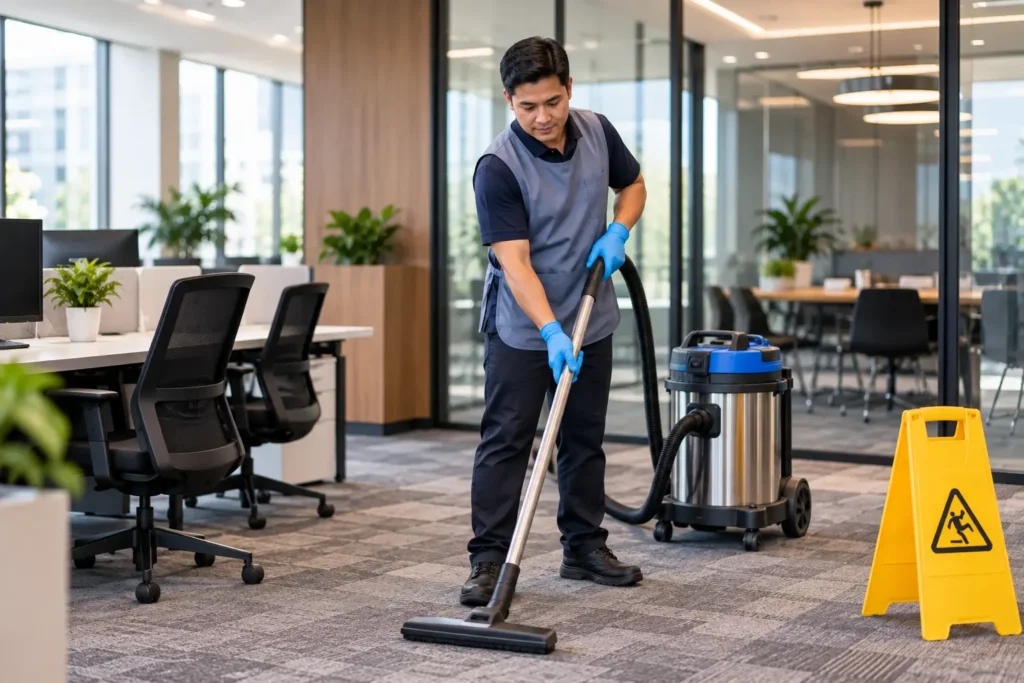
How to Compare Commercial Cleaning Companies in Auckland
Once you have spoken with several commercial cleaning providers, consider the complete service rather than making your decision based on one factor.
Experience matters, but so do quality control, scheduling flexibility, staff training, safety practices, communication, equipment, cleaning methods, transparency, and the ability to adapt.
Pay attention to the questions the cleaning company asks you as well.
A professional provider should want to understand your premises, operating hours, occupancy, flooring, high-traffic areas, shared facilities, security requirements, and expectations before recommending a cleaning programme.
That consultation can tell you a great deal about whether the provider is interested in simply winning another contract or developing a service that genuinely fits your workplace.
The Right Questions Can Lead to a Better Cleaning Partnership
Hiring commercial cleaners is not simply about finding someone to keep your workplace tidy.
You are selecting a provider that will regularly work inside your business and help maintain spaces used by employees, customers, clients, and visitors every day.
Taking the time to ask the right questions can help you understand what a commercial cleaning company actually provides, how it manages its cleaners, how standards are maintained, and whether the service represents good long-term value.
For Auckland businesses, the right commercial cleaning partner should combine professional cleaning with reliability, communication, flexibility, accountability, and a clear understanding of the workplace.
Looking for Reliable Commercial Cleaners in Auckland?
If you are currently comparing commercial cleaning companies, start by identifying exactly what your workplace requires.
Consider your operating hours, high-traffic areas, shared facilities, flooring, cleaning frequency, specialised cleaning requirements, and the standards you expect your provider to maintain.
FriendlyCare provides commercial cleaning across Auckland with customised cleaning plans, after-hours options, trained and insured cleaners, commercial-grade equipment, and structured quality processes.
Choosing the right provider should give your business more than a cleaner workplace. It should give you confidence that your premises are being maintained consistently and professionally.
Ask the right questions today and choose a commercial cleaning partner built around the needs of your workplace.