
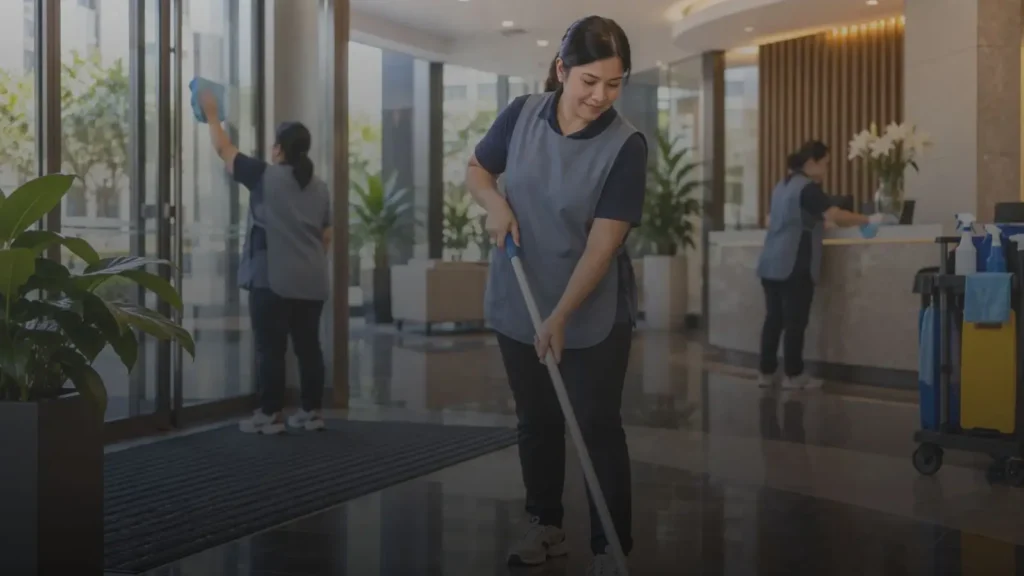
High-traffic areas are some of the hardest-working spaces in any commercial building. Entrances, reception areas, corridors, lift lobbies, stairwells, kitchens, washrooms, and shared amenities can experience constant movement throughout the working day.
For Auckland businesses, this level of activity creates an ongoing maintenance challenge. Dirt and moisture are tracked indoors, carpets and hard floors experience accelerated wear, high-touch surfaces require regular attention, and small maintenance issues can quickly become larger problems.
A well-planned commercial cleaning and maintenance programme helps protect more than the appearance of your property. It can support workplace safety, preserve flooring and other building assets, maintain hygiene standards, and create a more professional experience for employees, clients, tenants, and visitors.
The key is consistency.
Rather than waiting until a busy area looks dirty or worn, businesses can take a proactive approach that keeps high-use spaces cleaner, safer, and better presented throughout the year.
Here are five practical ways to maintain high-traffic areas in commercial buildings.
Why High-Traffic Commercial Areas Need Special Attention
Not every part of a commercial property experiences the same level of use.
Private offices, storage rooms, and low-use meeting spaces may require routine cleaning, but entrances, reception areas, corridors, kitchens, washrooms, and communal areas face considerably more foot traffic and daily contact.
Every person entering a building can bring in dust, dirt, moisture, and outdoor debris. Over time, this can affect carpets, hard flooring, walls, glass, fixtures, and other surfaces.
Without consistent maintenance, busy areas can quickly begin to look worn and neglected.
More importantly, poor housekeeping can contribute to workplace hazards. Wet flooring, loose mats, damaged surfaces, cluttered walkways, and poorly maintained entrances can all increase the likelihood of slips, trips, and falls.
WorkSafe New Zealand’s guidance on slips, trips and falls identifies slippery or uneven flooring, clutter, poor lighting, and inadequate housekeeping as factors that can contribute to workplace injuries.
For Auckland businesses, maintaining high-traffic areas should therefore be viewed as part of both professional presentation and responsible facility management.
1. Build a Cleaning Schedule Around Actual Foot Traffic
One of the biggest mistakes in commercial cleaning is treating every area of a building the same.
A meeting room used twice a week does not have the same cleaning requirements as a reception area used by hundreds of people. Likewise, an entrance exposed to Auckland rain may need significantly more attention than an internal corridor.
An effective cleaning schedule should reflect how the building is actually used.
Identify Your Highest-Traffic Zones
Start by identifying the spaces that receive the greatest amount of daily activity. These commonly include:
- Main entrances and exits
- Reception and waiting areas
- Lift lobbies and corridors
- Stairwells
- Shared kitchens and break rooms
- Bathrooms and washrooms
- Meeting and conference areas
- Frequently used communal spaces
These areas may require daily cleaning, with some tasks completed several times during particularly busy periods.
Focus on Prevention, Not Just Visible Dirt
Cleaning should not begin only when dirt becomes noticeable.
By that stage, debris may already have become embedded in carpet fibres, moisture may have affected flooring, or stains may have become more difficult to remove.
A structured programme allows dirt, spills, rubbish, and surface contamination to be addressed before they develop into larger cleaning or maintenance problems.
For businesses that need a structured approach, FriendlyCare provides commercial cleaning services in Auckland with scheduled routines designed around individual workplace and facility requirements.
2. Protect High-Traffic Flooring From Premature Wear
Floors absorb much of the impact created by daily foot traffic.
Carpet can trap dirt and develop visible traffic lanes, while hard flooring can accumulate scratches, scuff marks, grime, and moisture. Without the right maintenance, both can lose their appearance and require repair or replacement earlier than expected.
Use Entrance Matting as Your First Line of Defence
Good-quality entrance matting can help capture dirt and moisture before they spread throughout the building.
This is particularly valuable in Auckland during wet weather, when shoes can quickly bring water and outdoor debris onto internal flooring.
Entry mats should be correctly positioned, regularly cleaned, and replaced when they become excessively worn.
WorkSafe New Zealand specifically recommends entrance matting as one measure retailers can use to reduce the risk of people slipping on wet flooring during rainy conditions.
Match Cleaning Methods to the Flooring
Different flooring materials require different maintenance methods.
Carpets typically benefit from regular vacuuming combined with periodic deep cleaning to remove embedded dirt and staining.
Hard flooring may require mopping, machine scrubbing, polishing, or other appropriate treatments depending on the surface material and level of use.
The objective is not simply to make floors look clean today. A properly planned floor-care programme should help maintain their appearance and condition over the longer term.
FriendlyCare’s professional cleaning services include specialised carpet cleaning, floor scrubbing and polishing, window and glass cleaning, and steam cleaning for Auckland workplaces requiring more detailed maintenance.
3. Address Small Maintenance Problems Before They Become Expensive
High-traffic environments leave little room for minor defects to remain minor.
A loose section of carpet, cracked tile, damaged handrail, faulty light, worn entrance mat, or chipped surface may deteriorate quickly when hundreds of people pass through the area.
Routine inspections should therefore form part of your overall building maintenance strategy.
Look Beyond Cleanliness
During inspections, check for issues such as damaged or uneven flooring, loose carpet edges, worn mats, unstable handrails, poor lighting, damaged fixtures, cracked tiles, peeling paint, and obstructions in walkways.
Identifying these issues early gives facility managers an opportunity to arrange repairs before the problem becomes more expensive or creates unnecessary disruption.
For example, repairing a small section of loose carpet may be relatively straightforward. Leaving it exposed to continuous foot traffic can allow the damage to spread, potentially resulting in a larger repair or replacement.
Create a Clear Reporting Process
Cleaning teams are often among the first people to notice developing maintenance issues because they work closely with floors, fixtures, washrooms, entrances, and shared spaces.
A reliable cleaning provider should therefore do more than complete a checklist. Clear communication between cleaners, facility managers, and property teams can help identify problems earlier.
This proactive approach can reduce surprises and support better long-term facility management.
4. Give Shared Spaces the Attention They Deserve
High-traffic communal areas can have a disproportionate influence on how people perceive a workplace.
A client may never see every office or back-of-house area, but they are likely to see the entrance, reception area, corridor, meeting room, bathroom, or lift lobby.
These spaces shape first impressions.
Maintain a Professional Standard From the Entrance Onwards
A clean entrance and reception area immediately communicate that a property is being cared for.
Floors should be clean and free from obvious debris. Glass should be clear. Bins should not be overflowing. Seating and reception surfaces should be tidy and presentable.
These details may appear small individually, but together they influence how visitors perceive the professionalism of an organisation.
Do Not Overlook Employee Areas
Shared kitchens, staff rooms, bathrooms, and other amenities also require consistent attention.
These are some of the most frequently used spaces in an office and can quickly become untidy when cleaning frequency does not match occupancy.
Clean communal areas contribute to a workplace that feels organised, comfortable, and professionally maintained.
For workplaces where reception areas, meeting rooms, kitchens, bathrooms, floors, and other shared areas require regular attention, FriendlyCare’s office cleaning services in Auckland are tailored around workplace schedules, teams, and site requirements.
5. Partner With a Professional Commercial Cleaning Provider
As buildings become larger and occupancy increases, maintaining consistent cleaning standards becomes more complex.
Internal teams may be able to manage basic day-to-day tidying, but professional commercial cleaning provides the systems, equipment, trained personnel, and defined cleaning schedules required for more demanding environments.
Consistency Matters More Than Occasional Deep Cleaning
A commercial property should not move between periods of being exceptionally clean and noticeably neglected.
The goal should be a reliable standard that is maintained day after day.
Professional cleaning providers can establish cleaning scopes based on building size, operating hours, occupancy, high-traffic zones, flooring types, hygiene requirements, and business priorities.
This creates a more structured approach than reacting whenever an area becomes visibly dirty.
Professional Equipment Can Improve Results
Commercial facilities often require equipment beyond standard household cleaning tools.
Depending on the site, professional cleaners may use carpet extraction equipment, commercial vacuums, floor scrubbers, polishing equipment, steam-cleaning systems, and specialised tools for glass and other surfaces.
The right combination of trained cleaners, appropriate equipment, and a site-specific cleaning plan can help businesses maintain high standards while reducing the cleaning burden on internal staff.
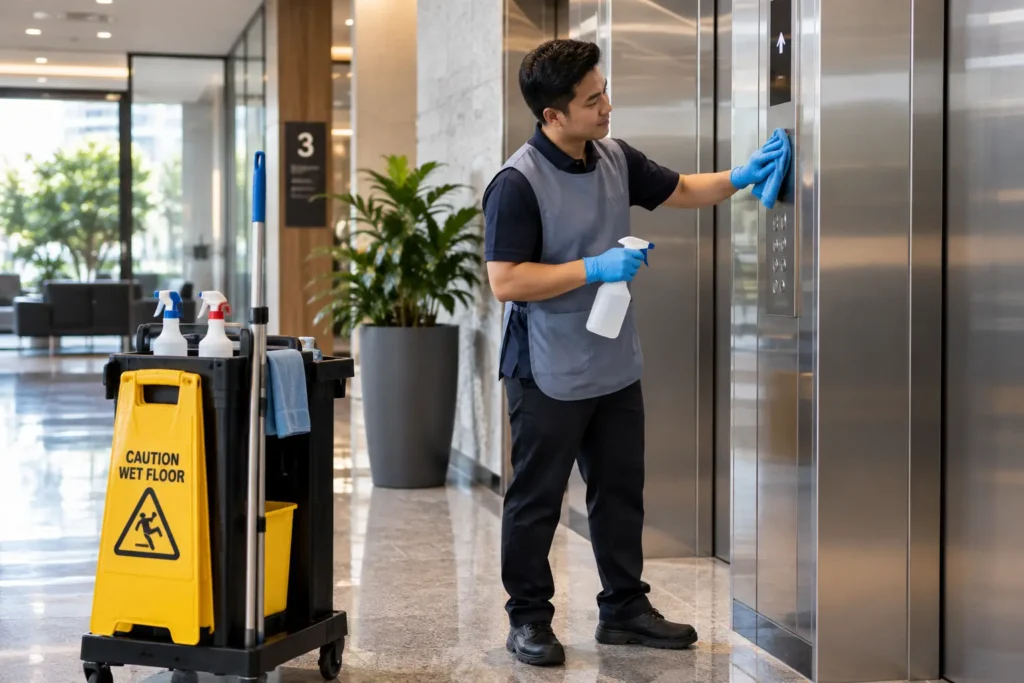
Adjust Your Cleaning Programme for Auckland’s Seasons
Commercial cleaning requirements can change throughout the year.
Auckland’s wetter periods can increase the amount of moisture and dirt entering buildings, particularly through entrances and ground-floor areas.
During these conditions, businesses may need to increase attention to entrance matting, wet-floor management, hard-floor cleaning, carpet care, and lobby maintenance.
Cleaning schedules should therefore remain flexible.
Rather than following exactly the same programme throughout the year, facility managers should review how weather, occupancy levels, events, and seasonal activity affect their property.
This allows resources to be directed where they are needed most.
Make Sustainability Part of Your Cleaning Strategy
Effective commercial cleaning can also support broader sustainability objectives.
Preventative maintenance can help extend the usable life of carpets, hard flooring, fixtures, and other building materials. Keeping these assets in better condition may reduce the need for premature replacement and the waste associated with it.
Businesses should also consider how cleaning products are selected, stored, handled, and used.
The New Zealand Environmental Protection Authority’s workplace products guidance explains the regulatory responsibilities surrounding hazardous substances and workplace products in New Zealand, including the relationship between EPA and WorkSafe requirements.
Where appropriate, businesses can also discuss environmentally responsible product options and cleaning practices with their commercial cleaning provider.
The goal should be to balance effective cleaning, workplace requirements, responsible product use, and long-term asset care.
How Often Should High-Traffic Commercial Areas Be Cleaned?
There is no single cleaning frequency that works for every commercial building.
Cleaning requirements depend on several factors, including:
- Number of employees and visitors
- Business operating hours
- Building size
- Type of flooring
- Weather and seasonal conditions
- Type of commercial activity
- Hygiene requirements
- Frequency of client or customer visits
Busy entrances, bathrooms, kitchens, reception areas, and other high-use spaces may require daily attention, while specialised floor or carpet treatments can be scheduled periodically according to condition and traffic levels.
A professional site assessment can help determine an appropriate cleaning frequency and scope for each area.
A Cleaner High-Traffic Area Starts With a Better System
Maintaining busy commercial spaces is not about reacting every time something looks dirty.
It is about creating a system that prevents small problems from becoming bigger ones.
By establishing cleaning schedules around actual foot traffic, protecting flooring, addressing maintenance concerns early, prioritising shared spaces, and using professional commercial cleaning support when required, Auckland businesses can maintain workplaces that are cleaner, safer, and consistently well presented.
The result is more than a cleaner building. It is a workplace that reflects the standards of the organisation operating within it.
Need Reliable Commercial Cleaning in Auckland?
If high-traffic areas are becoming difficult to manage, the solution may not be more reactive cleaning — it may be a better cleaning plan.
FriendlyCare provides professional commercial and office cleaning services for Auckland businesses, with cleaning programmes tailored to each site’s operating hours, traffic levels, layout, and requirements.
From entrances and reception areas to carpets, hard floors, bathrooms, kitchens, and shared spaces, FriendlyCare helps businesses maintain consistent standards without adding another task to the facility manager’s workload.
Keep your workplace clean, professional, and ready for every person who walks through the door.
Contact FriendlyCare to discuss a tailored commercial cleaning plan for your Auckland workplace.