
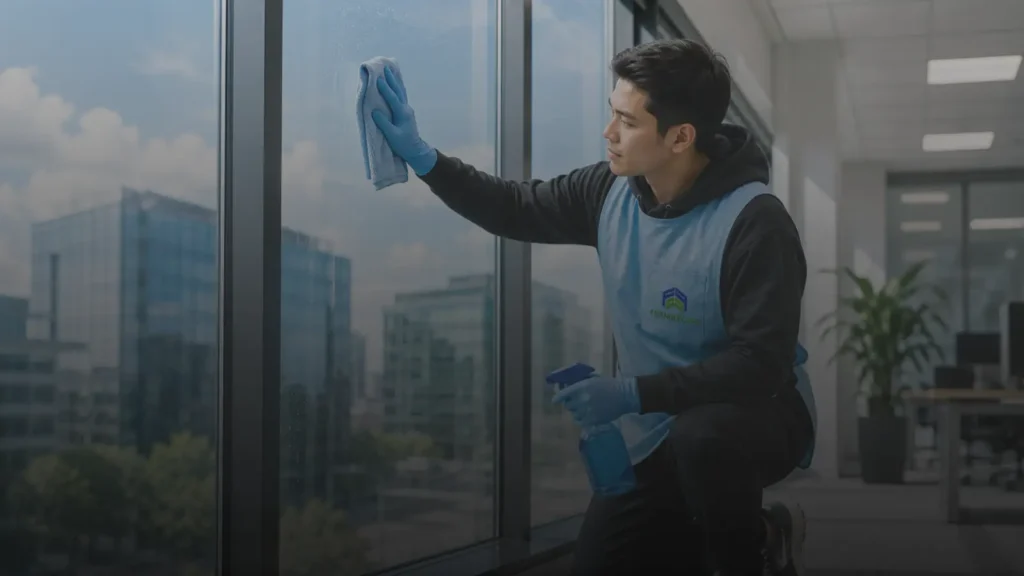
Glass is one of the most visible features of a modern office or commercial building. From exterior windows and entrance doors to meeting room partitions, clean glass can make a workplace feel brighter, more welcoming, and better maintained.
Keeping commercial glass clean, however, is not always straightforward. Fingerprints, dust, water spots, rain, pollution, and other contaminants can build up quickly, particularly in busy workplaces. Streaky or dirty glass can affect the appearance of a building and may leave a poor impression on clients, visitors, and employees.
For businesses across Auckland, following practical glass cleaning best practices can help maintain a professional workplace, protect glass surfaces, and keep commercial properties looking their best throughout the year.
This guide covers practical glass cleaning best practices for offices and commercial buildings, including cleaning schedules, suitable techniques, high-traffic areas, seasonal maintenance, and when it makes sense to bring in professional cleaners.
Why Glass Cleaning Best Practices Matter in Commercial Properties
Glass is often one of the first things people notice when they arrive at a commercial property. A storefront, reception entrance, office window, or glass meeting room can have a noticeable effect on how a business is perceived.
Clean glass creates a sharper and more professional appearance. On the other hand, fingerprints, streaks, dust, and water marks can make an otherwise well-maintained workplace look neglected.
Glass Cleaning Best Practices Start With First Impressions
First impressions happen quickly. Clients, visitors, potential employees, and business partners often form an opinion about a company before they have even spoken to anyone.
Clean windows and glass doors help create a workplace that feels organised, professional, and cared for. This is especially important for businesses that regularly welcome customers or operate in industries where presentation and trust matter.
Glass Cleaning Best Practices Help Reflect Workplace Standards
Small details can say a lot about how a business operates. When glass surfaces are consistently clean, they can reinforce the impression that the organisation pays attention to its workplace and the experience it provides.
Neglected glass can have the opposite effect. Smudges and visible buildup may seem minor, but across a reception area or entrance, they can quickly become noticeable.
The Workplace Benefits of Glass Cleaning Best Practices
Glass cleaning is about more than appearance. Well-maintained windows and internal glass surfaces can help create brighter, more comfortable, and more inviting workplaces.
Natural light is an important part of many modern office designs. Keeping windows clear helps make the most of available daylight and prevents dirt and residue from unnecessarily reducing visibility.
Glass Cleaning Best Practices Can Help Maximise Natural Light
Dirty windows can make interiors feel darker and less inviting. Regular cleaning keeps glass clear so more natural light can enter the workplace.
For offices that rely heavily on windows, skylights, or internal glass features, maintaining these surfaces should be treated as part of the wider building maintenance programme rather than an occasional cosmetic task.
Glass Cleaning Best Practices Support a More Professional Atmosphere
Glass partitions and meeting room walls are popular in modern offices because they create an open and collaborative feel.
That design works best when the glass is clear. Fingerprints, smudges, dust, and streaks can quickly undermine the clean and contemporary look businesses are trying to achieve.

Glass Cleaning Best Practices 1: Set a Regular Cleaning Schedule
One of the simplest ways to keep commercial glass looking good is to clean it consistently.
Waiting until windows are visibly dirty can make cleaning harder and allow contaminants to build up. A planned schedule helps businesses stay ahead of the problem rather than dealing with it after the glass has already lost its finish.
Glass Cleaning Best Practices Should Prevent Dirt Buildup
Glass is exposed to dust, fingerprints, pollutants, rain, and other contaminants every day. Some buildup may not be obvious at first, but it gradually affects clarity and appearance.
The right cleaning frequency depends on the property and its surroundings. A building on a busy Auckland road may need more frequent exterior cleaning than a quieter office in a low-traffic area.
Glass Cleaning Best Practices for High-Traffic Areas
Some glass surfaces need attention more often than others.
Entrance doors, reception areas, meeting rooms, lifts, and internal partitions are frequently touched, making fingerprints and smudges much more noticeable.
These areas should be included in routine maintenance schedules and checked regularly throughout the working week.
Glass Cleaning Best Practices 2: Deal With Marks and Stains Early
Not every glass problem comes from ordinary dust. Fingerprints, water spots, adhesive residue, bird droppings, and accidental spills can all leave marks.
Leaving these contaminants on the glass for too long can make them harder to remove and, in some circumstances, contribute to staining or surface damage.
Glass Cleaning Best Practices Mean Acting Before Problems Build Up
Prompt cleaning is usually easier than trying to restore heavily neglected glass later.
Regular inspections can help identify water spots, mineral deposits, residue, or other marks before they become a bigger maintenance issue.
Glass Cleaning Best Practices for Exterior Windows
Exterior glass is exposed to Auckland’s changing weather and surrounding environment.
Rain, wind, airborne particles, traffic pollution, pollen, and bird droppings can all affect window cleanliness. Buildings near busy roads, industrial areas, or coastal environments may experience faster buildup and need a more tailored cleaning schedule.
Glass Cleaning Best Practices 3: Use the Right Products and Techniques
A good result depends on more than simply wiping a window with a cloth.
Using the wrong cleaning product, tool, or technique can result in streaks, residue, scratches, or an uneven finish. The method should suit the type of glass, the level of contamination, and the size and location of the surface being cleaned.
Glass Cleaning Best Practices Avoid Unnecessary Residue
Some products can leave behind residue that attracts dust and makes glass appear dirty again soon after cleaning.
The goal should be a clean surface without excessive product buildup. Where appropriate, microfiber cloths, quality squeegees, and suitable commercial glass-cleaning solutions can help achieve a clearer finish.
Glass Cleaning Best Practices Depend on Technique
Even the right cleaning product can produce disappointing results when the technique is inconsistent.
Professional cleaners typically use systematic methods to control moisture, minimise streaks, and maintain an even finish across large glass areas. This becomes particularly important when cleaning extensive office windows, glass partitions, or commercial façades.
Glass Cleaning Best Practices 4: Prioritise Entrances and Reception Areas
Not every glass surface has the same level of visibility.
Entrance areas and reception spaces deserve particular attention because they are often the first parts of a building that visitors see.
Glass Cleaning Best Practices Should Focus on High-Visibility Glass
Glass doors and entrance panels can quickly show fingerprints, smears, and marks. Keeping these surfaces clean creates a more welcoming appearance from the moment visitors arrive.
This is especially important for businesses where clients, customers, and suppliers regularly visit the premises.
Glass Cleaning Best Practices Improve Reception Presentation
Reception areas often represent the company’s brand and workplace standards.
Clean glass doors, partitions, displays, and decorative features help keep the area looking polished without requiring major changes to the space itself.
Glass Cleaning Best Practices 5: Maintain Internal Glass Partitions
Internal glass is often overlooked because it is protected from outdoor weather. In reality, internal glass can become dirty quickly because people interact with it throughout the day.
Meeting rooms, boardrooms, executive offices, breakout spaces, and glass doors can all accumulate fingerprints and smudges.
Glass Cleaning Best Practices Help Keep Internal Glass Clear
Frequently touched areas around door handles and entrances usually need more attention than less accessible surfaces.
Routine cleaning helps maintain transparency and keeps internal spaces looking professional during meetings and day-to-day operations.
Glass Cleaning Best Practices Preserve Modern Office Design
Glass is commonly used to make offices feel more open and connected.
When partitions are clean, they allow businesses to retain that visual openness. When the glass is covered in fingerprints and streaks, the same design can quickly look untidy.
Glass Cleaning Best Practices 6: Adjust Cleaning for Auckland’s Seasons
Auckland’s weather can influence how quickly exterior glass becomes dirty.
Rain, wind, pollen, airborne particles, and coastal conditions can all contribute to buildup. Rather than using exactly the same schedule throughout the year, businesses should consider how local conditions affect their property.
Glass Cleaning Best Practices Should Account for Weather Exposure
Some periods may require more frequent attention, particularly for buildings exposed to heavy traffic, coastal conditions, or strong weather.
Regular inspections make it easier to adjust the cleaning programme when conditions change.
Glass Cleaning Best Practices Support Consistent Presentation
Seasonal maintenance is not about cleaning more simply because the calendar changes. It is about responding to the actual conditions affecting the building.
A flexible schedule can help prevent dirt from building up for long periods and reduce the need for intensive restoration work later.
Glass Cleaning Best Practices 7: Know When to Use Professional Cleaners
Basic internal glass cleaning can often be incorporated into regular workplace maintenance. Larger or more complex jobs are different.
Commercial buildings may have large windows, high-level glass, multi-storey façades, difficult-to-access areas, or specialist architectural features that require professional equipment and experience.
Glass Cleaning Best Practices Must Include Workplace Safety
External window cleaning can involve working at height, which introduces additional risks.
WorkSafe New Zealand provides guidance on identifying and managing risks associated with working at height. Businesses can refer to its dedicated Working at height in New Zealand guidance when considering safety requirements for this type of work.
Glass Cleaning Best Practices Require Suitable Equipment
Professional commercial cleaners can use equipment and cleaning systems suited to large or difficult-to-access glass surfaces.
The right equipment can improve efficiency, produce a more consistent finish, and reduce the need for staff to attempt tasks outside their normal duties.
The Long-Term Benefits of Glass Cleaning Best Practices
Regular glass maintenance should not be viewed as a purely cosmetic expense.
Consistent cleaning helps maintain a property’s appearance, supports a positive workplace environment, and keeps highly visible areas looking professional.
Glass Cleaning Best Practices Support Building Presentation
Commercial properties are valuable assets, and their overall condition can influence how they are perceived by occupants, visitors, customers, and potential tenants.
Clean windows and glass features contribute to a well-maintained exterior and can help a property present a more professional image.
Glass Cleaning Best Practices Can Reduce Long-Term Maintenance Problems
Regular cleaning can help prevent contaminants from remaining on glass for extended periods.
Rather than allowing buildup to become difficult to remove, a consistent maintenance programme provides an opportunity to identify problems early and address them before they become more complicated.
Sustainability and Glass Cleaning Best Practices
Sustainability is becoming an increasingly important consideration for Auckland businesses.
Cleaning practices can form part of a broader approach to responsible resource and chemical management. Businesses should consider the products being used, the amount of water required, and whether cleaning methods can minimise unnecessary environmental impact.
Glass Cleaning Best Practices Should Consider Responsible Product Use
The New Zealand Environmental Protection Authority recommends reading product labels, using only the amount needed, and considering products with fewer hazardous chemicals where practical.
Businesses can refer to the EPA’s Protecting our environment from chemicals guidance for further information.
Glass Cleaning Best Practices Can Support More Efficient Cleaning
Microfiber cleaning methods and appropriate product selection can help reduce unnecessary chemical and water use while still achieving a good result.
The most suitable approach will depend on the building, the type of glass, the level of contamination, and the cleaning system being used.
Conclusion: Put Glass Cleaning Best Practices Into Your Maintenance Plan
Clean glass can make a noticeable difference to the way an office or commercial building looks and feels.
From entrance doors and reception areas to office windows and internal partitions, regular maintenance helps businesses maintain a professional appearance and get more from their glass features.
The most effective approach is simple: establish a regular schedule, deal with marks early, use suitable products and techniques, prioritise high-traffic areas, adjust maintenance for Auckland’s conditions, and use professional cleaners when the job requires specialist equipment or work at height.
For Auckland businesses, making glass cleaning best practices part of the wider commercial cleaning programme can help keep the workplace brighter, cleaner, and consistently presentable throughout the year.